
Flour Processing Machinery Plant: Streamlining Grain Milling with Cutting-Edge Automation
2026-07-31
In today’s fast-paced food industry, grain milling demands more than just heavy machinery—it requires intelligent, seamless automation that eliminates guesswork. Imagine a flour processing plant where every stage, from raw grain intake to final packaging, operates in perfect sync, maximizing yield and consistency without constant manual intervention. At PINGLE, this isn’t a distant vision; it’s the core of our engineering philosophy. But what truly sets a modern mill apart? The answer lies in the subtle integration of cutting-edge control systems that adapt in real time, turning traditional challenges into competitive advantages. Step inside the future of milling, where precision meets productivity in ways you’ve never considered.
Automated Grain Intake: Where Precision Meets Speed
The old image of grain receiving—trucks queuing, manual sampling, and slow paperwork—is fading fast. Today’s automated intake systems combine high-speed sensors with intelligent software to capture weight, moisture, and quality metrics in seconds. A single driver can roll onto the scale, have the grain probed and analyzed, and be directed to the correct pit without leaving the cab. This seamless flow eliminates bottlenecks that once cost elevators precious hours during peak harvest.
What makes the difference is the fusion of precision and velocity. Optical sorters and near-infrared analyzers now deliver lab-grade accuracy at line speed, flagging contaminants and measuring protein or oil content on the fly. Meanwhile, automated routing algorithms dynamically assign unloading bays based on real-time traffic and commodity type, slashing vehicle dwell time. Facilities that adopt such technology often see throughput rise by 30% or more, while data errors plummet.
Behind the scenes, every transactional detail—from GPS-tagged origin field to bin allocation—is captured electronically, forming a rich dataset for inventory management and traceability. This not only speeds up settlement but also builds a defensible quality audit trail. For grain handlers, the payoff is clear: faster turns, tighter margins, and the ability to handle larger volumes without expanding their footprint. Automation turns the intake process from a chore into a competitive edge.
24/7 Operations Without Compromising Quality
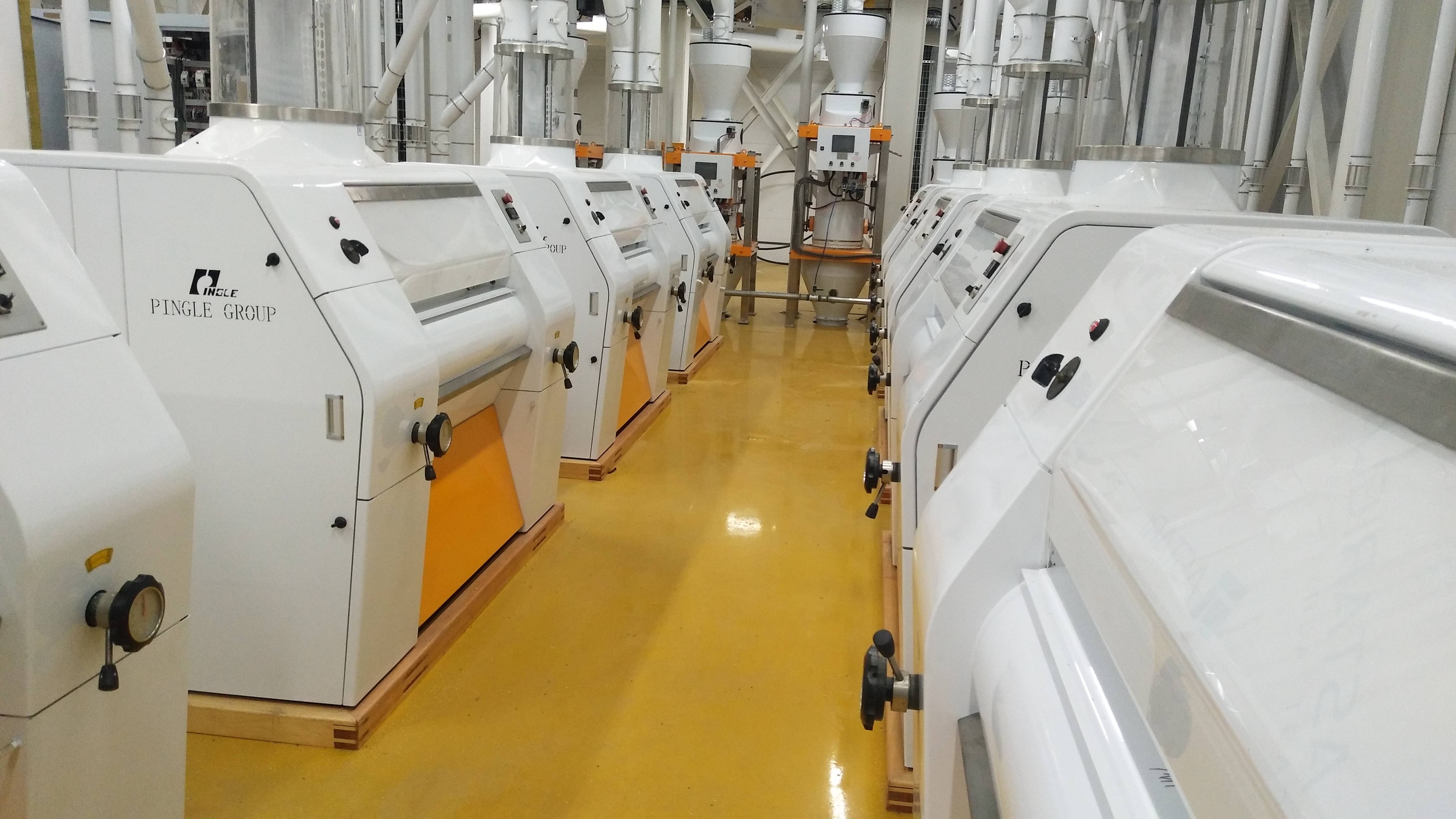
Around-the-clock availability doesn’t have to mean burning out your team or letting standards slip. Smart automation handles repetitive tasks during off-hours, while a rotating on-call system ensures human expertise kicks in the moment it’s needed. The result? Issues get resolved before most people even notice them.
Quality thrives when processes are designed for consistency, not just speed. We’ve embedded real-time monitoring and adaptive checklists into every overnight shift, so whether it’s 2 p.m. or 2 a.m., every action is tracked, verified, and logged—no shortcuts, no guesswork.
The real secret is balancing technology with human judgment. Automated alerts flag anomalies instantly, but our specialists review and contextualize those signals to prevent false alarms. It’s a partnership where machines handle volume and people handle nuance, keeping your operations seamless even when you’re asleep.
Data-Driven Adjustments for Optimal Milling
Modern milling operations thrive on the precise interpretation of real-time sensor data, where every cut, speed, and feed adjustment is informed by a continuous stream of operational metrics. Rather than relying on static parameters, adaptive systems analyze vibration patterns, spindle loads, and thermal profiles to make instant corrections. This dynamic approach minimizes tool wear, prevents chatter, and maintains consistent surface finishes even as material properties vary unexpectedly.
The shift toward data-centric milling extends beyond immediate machine control. By aggregating performance data across thousands of cycles, manufacturers uncover subtle correlations—such as how ambient humidity affects dimensional accuracy or which tool geometries excel under specific chip load conditions. These insights feed directly into closed-loop systems that autonomously refine G-code parameters, reducing the need for manual intervention and allowing machinists to focus on high-value problem-solving rather than routine tweaks.
Adoption of these intelligent adjustment frameworks demands a thoughtful integration of edge computing and durable instrumentation. Vibration sensors, acoustic emission detectors, and laser measurement systems must deliver reliable signals in harsh environments, while edge devices process this information locally to ensure sub-millisecond response times. The result is a milling ecosystem that not only reacts to anomalies but anticipates them, transforming raw data into a strategic asset for precision manufacturing.
Reducing Waste Through Smarter Process Control
We often overlook how small deviations in production lines quietly pile up into significant waste. Instead of relying on end-of-line inspections, real-time monitoring of variables like temperature, pressure, or fill levels lets operators catch shifts before they become problems. This kind of immediate insight not only prevents out-of-spec batches but also reduces the need for rework—one of the biggest, yet invisible, drains on resources.
When control systems are designed with adaptive logic, they learn from past runs and adjust setpoints autonomously. For example, a packaging line that fine-tunes sealing parameters based on material thickness can drastically cut down on rejected units. The result is less scrap, lower energy consumption, and a quieter, more predictable operation where waste becomes the exception rather than the norm.
Seamless Integration of Cleaning, Grinding, and Packaging
The production line flows without interruption as each stage naturally feeds into the next, eliminating the usual bottlenecks between cleaning, grinding, and packaging. Raw materials move through a unified system where sensors adjust speeds and volumes in real time, so there’s no need to stop and recalibrate between processes. This kind of harmony keeps throughput high and reduces the risk of contamination or material loss during transfer.
Operators appreciate how the equipment communicates across functions—the grinding unit knows exactly when the cleaning cycle finishes, and the packaging station prepares in advance for the next batch. It’s not just about combining machines; it’s about orchestrating them to work as one cohesive unit. The result is a facility that feels less like a collection of disconnected departments and more like a single, intelligent system.
Maintenance becomes simpler too, because the integrated design exposes potential issues before they cascade. If a grinder begins to underperform, the cleaning module can adjust its pace automatically to prevent jams downstream, and packaging won’t rush ahead and create waste. This built-in adaptability ensures that even when variables shift—like raw material consistency or humidity—the entire line stays balanced and productive.
Building Resilience with Modular Machine Design
Modular machine design offers a fundamentally different approach to manufacturing resilience. By breaking down complex systems into interchangeable functional units, companies can isolate failures without halting entire production lines. When a single module encounters an issue, operators can swap it out in minutes rather than waiting for specialized technicians to diagnose and repair an integrated monolith. This built-in redundancy means that even unplanned downtime becomes a manageable event rather than a crisis.
The financial benefits extend well beyond maintenance speed. With modular platforms, manufacturers can reconfigure production flows to meet shifting market demands without massive capital reinvestment. Need to boost output of a newly popular product variant? Simply add more of the specific processing modules. Facing a component shortage that throttles one section? Redirect inventory toward other modules that can keep running independently. This fluidity turns the factory floor into a living system that responds to constraints in real time.
Perhaps most importantly, modularity encourages a culture of continuous improvement. Since individual modules can be upgraded or replaced as technology advances, there is no need to wait for a full equipment refresh cycle. Sensors, controllers, and even mechanical subassemblies evolve piece by piece, which spreads investment over time and reduces the risk of obsolescence. In an era where supply chain disruptions and technological shifts happen more frequently, this gradual evolution keeps operations nimble without sacrificing reliability.
FAQ
The primary aim is to transform raw grains into high-quality flour through a streamlined sequence of cleaning, conditioning, grinding, and sifting, all enhanced by advanced automation to maximize efficiency and consistency.
Automation takes over repetitive tasks, monitors critical parameters in real time, and adjusts operations on the fly—this reduces human error, cuts down on waste, and ensures every batch of flour meets exact specifications without constant manual intervention.
They often feature pneumatic conveying systems, precision sorting with optical sensors, automatic roller mills with intelligent gap adjustment, and central PLC control panels that synchronize the entire production line from grain intake to packaging.
Absolutely. Modern setups include flexible configurations and easily swappable components, allowing operators to switch between wheat, corn, rice, or specialty grains with minimal downtime and recalibration.
While automation reduces wear-and-tear through optimal operation, regular check-ups on sensors, lubrication of moving parts, and software updates are essential to keep the plant running smoothly. Many systems also feature self-diagnostic alerts to flag potential issues early.
It provides unprecedented control over particle size, moisture content, and ash levels. Automated sampling and analysis at multiple stages ensure that only flour meeting strict quality standards is packaged, resulting in superior baking performance and shelf life.
Yes, many plants offer retrofitting packages. Engineers assess the current layout and integrate new sensors, drives, and control software into older machinery, bringing the benefits of automation without a complete overhaul.
Conclusion
In modern grain processing, the journey from raw harvest to market-ready flour begins with an automated intake system that combines precision and speed to handle diverse grains with minimal human intervention. This initial stage sets the tone for a facility designed to operate continuously—24 hours a day, 7 days a week—without sacrificing product consistency. Behind the scenes, data-driven algorithms monitor every variable, from grain moisture to grind pressure, making moment-to-moment adjustments that fine-tune extraction rates and maintain the target flour profile. This intelligent approach ensures that even during high-volume runs, quality never wavers and the machinery adapts seamlessly to different grain characteristics.
The entire milling line, from cleaning to grinding and packaging, is harmonized into a single, uninterrupted flow that minimizes manual transfers and potential contamination points. Smarter process control goes beyond efficiency; it actively reduces waste by reclaiming by-products and optimizing energy use. At the core of this adaptability lies a modular machine design—a philosophy that allows plants to scale up or reconfigure in response to market shifts without a complete overhaul. By swapping or adding modules, millers can introduce new flours or expand capacity with minimal downtime, building resilience into their operations and future-proofing their investment.
Contact Us
Contact Person: Jiakuo Wu
Email: [email protected]
Tel/WhatsApp: +86-13011566087
Website: https://www.pinglemachine.com